Sri Suktam Lyrics in Sanskrit & English With Meaning | Rigvedic Hymn to Lakshmi
Read complete Sri Suktam lyrics in Sanskrit with English transliteration, verse-by-verse Hindi भावार्थ and English meaning. The sacred 16-verse Rigvedic hymn to Goddess Lakshmi for spiritual peace and prosperity.
About Sri Suktam (श्री सूक्त परिचय)
The Sri Suktam (श्री सूक्तम्) is the celebrated Vedic hymn dedicated to Goddess Lakshmi (Sri), the eternal consort of Lord Vishnu and the cosmic embodiment of auspiciousness, grace, spiritual purity, and sovereign abundance. Found in the Khilani (canonical supplementary hymns) of the Rigveda, the Sri Suktam is revered across all Vedic traditions as the supreme mantra-collection for invoking divine light, dispelling inner and outer darkness (Alakshmi), and fostering harmony in the home.
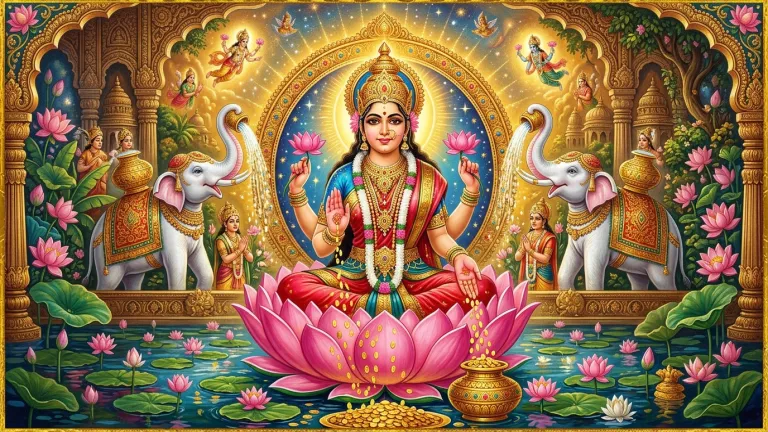
In Vedic symbolism, the hymn addresses Agni (Jatavedas)—the sacred fire who acts as the divine messenger—to bring forth Goddess Lakshmi into the devotee's life. The verses depict the Mother seated upon an open pink lotus (Padmasthita), of golden complexion (Hiranyavarna), holding lotuses, and heralded by the trumpeting of royal white elephants (Gajalakshmi).
On this page, devotees will find the complete traditional 16 Vedic mantras in Devanagari Sanskrit, accurate English transliteration (IAST), verse-by-verse Hindi भावार्थ, and English philosophical meaning, accompanied by practical recitation methods, spiritual significance, and authentic FAQs.
Spiritual Significance of Sri Suktam
According to devotional traditions, Sri Suktam is not merely a prayer for material wealth, but a comprehensive sadhana for holistic well-being:
Dispelling "Alakshmi" (Misfortune & Negativity)
Verses 5, 6, and 8 explicitly pray for the eradication of Alakshmi—the subtle forces of lethargy, despair, internal discord, and financial instability.
Truth in Speech & Nobility of Resolve
Verse 10 prays: "Vachah satyam ashimahi"—may our words be truthful and our intentions noble. True Lakshmi resides where truthfulness, humility, and purity flourish.
Sacred Bilva & Botanical Grace
Verse 6 celebrates the sacred Bilva tree, born from the tapas of Lakshmi. Chanting while offering Bilva leaves or lotus petals to Sri-Hari is a cherished temple practice.
Panchamrita Abhishekam Essential
In all Mahalakshmi shrines and during Diwali Lakshmi Puja, priests recite the Sri Suktam during milk, honey, and rose-water abhishekam to sanctify the home and temple.
When to Recite Sri Suktam
-
Friday (Shukrawar) Worship: Friday is traditionally sacred to Goddess Mahalakshmi. Reciting Sri Suktam on Friday mornings or evenings brings profound peace.
-
Purnima (Full Moon) & Sharad Purnima: On Full Moon days, especially Sharad Purnima (Kojagari Lakshmi Puja), nighttime recitation is considered particularly fruitful.
-
Diwali & Dhanteras: During Diwali Mahalakshmi Puja, chanting Sri Suktam with ghee oblations or flower offerings is a cornerstone ritual.
-
Daily Morning Sadhana: Reciting once every morning after a bath invokes clarity, peaceful prosperity, and positive domestic energy.
How to Recite Sri Suktam (पाठ विधि)
- Cleanliness & Environment: Clean your prayer area, take a purifying bath, and wear clean fresh clothes (yellow or red silk/cotton is traditionally preferred).
- Ghee Lamp & Fragrance: Light a pure cow-ghee lamp (Diya) and fragrant incense or dhoop before an image of Goddess Lakshmi or Lakshmi-Narayana.
- Offerings: Offer fresh lotus flowers, red roses, or Bilva leaves along with kheer (sweet rice pudding) or fruits as Naivedyam.
- Meditation (Dhyanam): Close your eyes and visualize Goddess Lakshmi seated upon a radiant lotus, smiling benevolently and pouring golden blessings into your heart.
- Chanting: Recite the 16 mantras with devotion and steady pronunciation. You may chant 1, 3, or 11 times according to your capacity.
- Samapti: Conclude by singing the Om Jai Lakshmi Mata Aarti and offering prasad to family members with devotion.
Frequently Asked Questions (FAQ)
What is the Sri Suktam?
The Sri Suktam is an ancient Vedic hymn from the Rigveda Khilani dedicated to Goddess Lakshmi (Sri). Comprising 16 core mantras, it invokes the Mother of the Universe for auspiciousness, spiritual illumination, and freedom from scarcity.
Why is Agni (fire) addressed in the Sri Suktam?
In Vedic liturgy, Agni (Jatavedas) is the divine courier who carries human prayers to celestial realms. In Sri Suktam, Agni is addressed as the divine purifier through whom the golden, unshakeable presence of Goddess Lakshmi is invited into the aspirant's consciousness and home.
Can anyone recite Sri Suktam at home?
Yes. Any devotee, man or woman, can recite Sri Suktam with sincere devotion and cleanliness. Beginners can follow along using the provided Roman transliteration and listen to traditional recitation.
What is the significance of the Bilva tree mentioned in verse 6?
Verse 6 reveals that the sacred Bilva tree was born from the tapas (penance) of Goddess Lakshmi. Its fruits and leaves possess the divine property of dispelling both internal ignorance and external poverty (Alakshmi).
How many verses are in the traditional Sri Suktam?
The core traditional Vedic Sri Suktam consists of exactly 16 mantras (15 core invocations ending with verse 16 as the phalashruti / phala verse).