Venkateswara Suprabhatam Lyrics in Sanskrit & English With Meaning | Complete 29 Verses
Read complete 29 verses of Sri Venkateswara Suprabhatam lyrics in Sanskrit with English transliteration, verse-by-verse Hindi भावार्थ and English meaning. The iconic morning prayer of Tirumala Balaji.
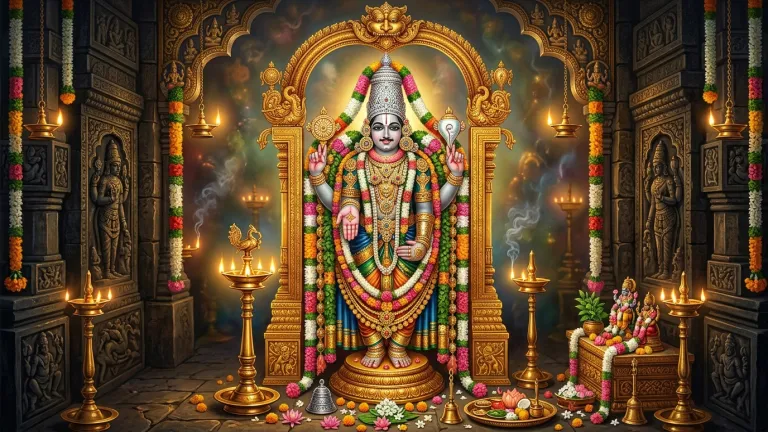
About Sri Venkateswara Suprabhatam (वेंकटेश्वर सुप्रभात परिचय)
The Sri Venkateswara Suprabhatam (श्री वेङ्कटेश्वर सुप्रभातम्) is the celebrated morning prayer recited every day at dawn to gently awaken Lord Sri Venkateswara (Lord Balaji / Srinivasa) in the sanctum sanctorum of the world-famous hill shrine of Tirumala. Composed in sublime Sanskrit verse around 1430 CE by Sri Prativadi Bhayankaram Annan, an ardent disciple of Sri Manavala Mamunigal and follower of the Sri Vaishnava tradition of Sri Ramanujacharya, the hymn has become the spiritual heartbeat of millions of Hindu homes worldwide.
The Suprabhatam opens with the immortal words spoken by Sage Vishwamitra to Lord Rama in the Valmiki Ramayana: "Kausalya supraja Rama poorva sandhya pravartate / Uttishtha narashardula kartavyam daivam-ahnikam" ("O Rama, noble child of Kausalya! The dawn is breaking in the east; arise, O lion among men, to perform the divine rituals"). Through 29 meticulously composed verses, the poet paints a mesmerizing picture of creation awakening—celestial sages bearing Akashaganga lotuses, humming bees emerging from blossoming flowers, cows being milked, the Nine Planets (Navagrahas) standing as humble servants, and Lord Shiva, Brahma, and Indra singing the Lord's glories.
On this page, devotees will find the complete 29 verses of the primary Suprabhatam in clean Devanagari script, Roman transliteration, verse-by-verse Hindi भावार्थ, and English translation, along with liturgical context and daily chanting guidelines.
Structural Breakdown of the Tirumala Morning Liturgy
The complete morning ritual recitation at Tirumala comprises four distinct sections:
1. Suprabhatam (29 Verses)
The morning awakening hymn invoking Lord Srinivasa and Goddess Padmavathi, painting the beauty of the dawn upon Mount Sheshadri.
2. Sri Venkateswara Stotram (16 Verses)
A classical hymn praising the transcendental attributes, divine weapons, and auspicious incarnations of the Lord.
3. Sri Venkateswara Prapatti (16 Verses)
The formal prayer of absolute self-surrender (Sharanagati) at the sacred lotus feet of Lord Venkateswara.
4. Mangalashasanam (14 Verses)
Composed by Sri Manavala Mamunigal, offering auspicious blessings and longevity (Mangalam) unto the Lord of the Seven Hills.
Spiritual Significance of Daily Recitation
According to Vaishnava tradition, reciting or listening to the Suprabhatam brings numerous spiritual blessings:
- Positive Start to the Day: Fills the home environment with serenity, divine vibrations, and sattvic energy.
- Purification of Mind & Senses: Disperses morning lethargy and aligns the mind with spiritual awareness and gratitude.
- Attainment of Divine Grace: Verse 24 states that whoever recites this prayer at dawn receives divine wisdom (jnana), auspicious fortune (mangala), and enduring happiness.
- Mitigation of Astrological Doshas: Verse 16 highlights that all nine celestial planets serve as the humble servants of Lord Venkateswara, helping pacify adverse astrological influences.
Traditional Recitation Practice (पाठ विधि)
Auspicious Timing
Dawn (Brahma Muhurta or Ushas Kala), ideally between 4:30 AM and 6:00 AM, at the very transition from night into morning.
Step-by-Step Procedure
- Bathe, wear clean traditional clothes, and light a pure cow ghee lamp before an image of Lord Venkateswara or Sri Maha Vishnu.
- Offer fresh water, Tulasi leaves, and fruits if available.
- Recite the 29 verses with devotion and rhythm, concluding with the surrender prayer ("Sri Venkatesha mama dehi karavalambam").